Solid Proof – Volunteers Make a Difference
On the Track to Reclaim a Degraded Grassy Woodland


A purple ocean of Paterson’s Curse growing on the Majura Paddock in 07.10.2007 (left) and the same site five years and many volunteer hours of weed control later in 26.10.2012 (right) (Photographs Waltraud Pix).
Prior to 2000, the once native pasture paddock opposite of the Hackett water reservoir was over-stocked with horses. Weeds were introduced with daily supplementary hay food. The weeds spread through the paddock and invaded the adjacent nature reserve. Continuous grazing pressure from rabbits and kangaroos prevented the natural regeneration of local plants after the horses were removed in the late 1990s (because of Paterson’s Curse poisoning).
In 2004 Friends of Mt Majura swang into action. Volunteers removed woody weeds from the drainage line that runs through the southern part of the paddock and adjoining land and replaced them with local shrubs and ground cover plants.
In spring 2006 unabashed volunteers began to tackle umpteen herbaceous weeds such as horehound that occurred under the canopy of remnant trees and carpets of Paterson’s Curse that covered the open tree-cleared area. They collected and broadcasted local grass and forb seeds and in 2008/09, 2009/10 and 2011/12 assisted the Parks and Conservation Service with a program to control rabbits.
On three consecutive National Tree Days in winter 2009, 2010 and 2011 over 500 members of the wider public people, the Hackett Blue Gum Community School, the Majura Mountain Scouts, the Gungahlin Eagle’s Rugby Club, and ADFA cadets joint the Friends to plant native trees, shrubs and ground cover plants.
Current and ongoing work includes the planting of a range of native groundcover species to increase diversity and improve the habitat value of the area, work to reduce erosion and improve compacted soil, controlling weeds to remove competition and monitoring progress of the groundcover planting and weed control.
Reclaiming the grassy woodland takes a long time however the hard work by volunteers made already a remarkable and visible difference.
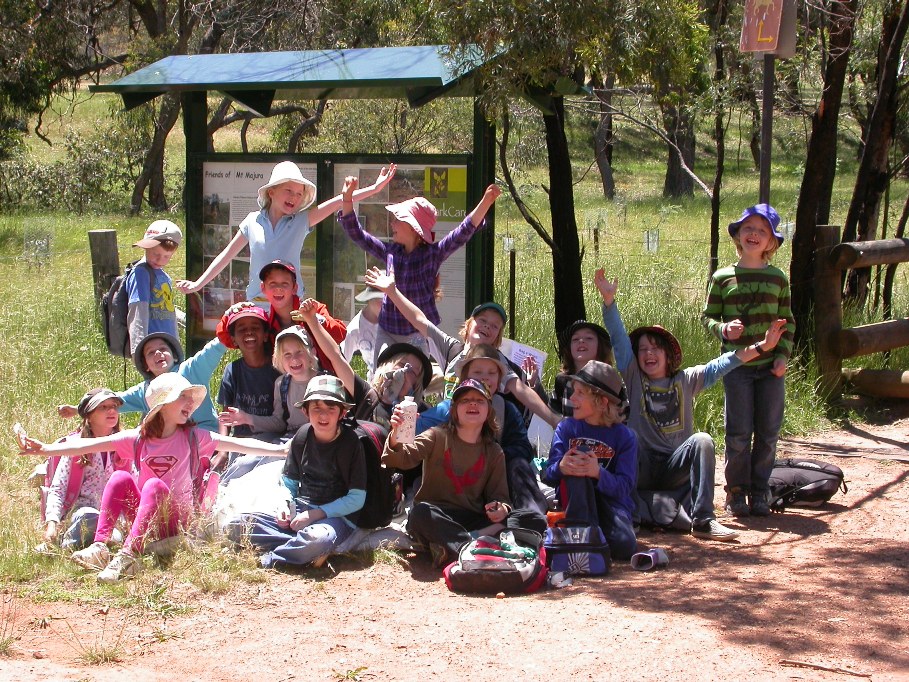
Students of the local Blue Gum School celebrate a successful Weed Bash in November 2010
 Pull and Bag a Weed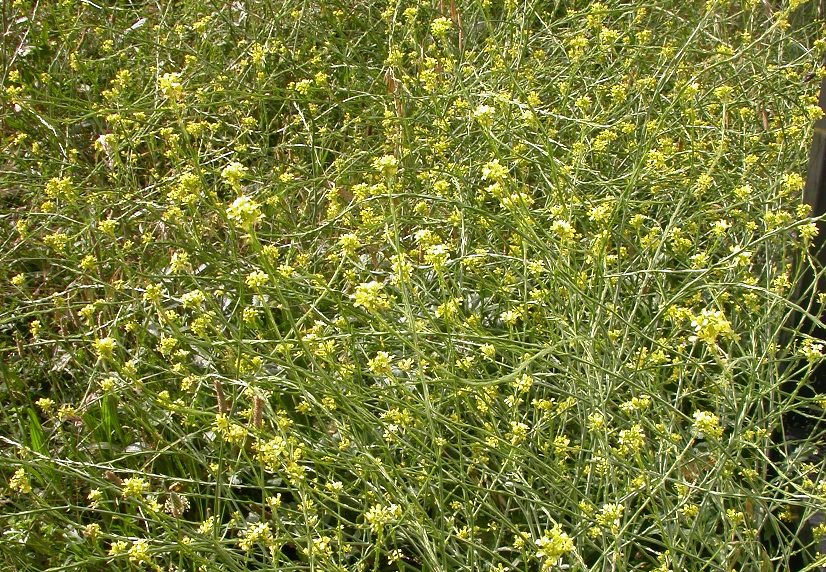
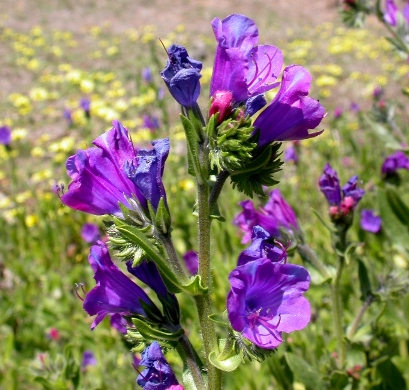
What: purple Paterson’s Curse (PC), Echium plantagineum (photo top left) and yellow Buchan Weed (BW), Hirschfeldia incana.
When: Whenever it suits before the plants loose their highly visible petals and start to shed seeds (PC: end Nov to begin Dec; BW: Dec through to May depending on the season).
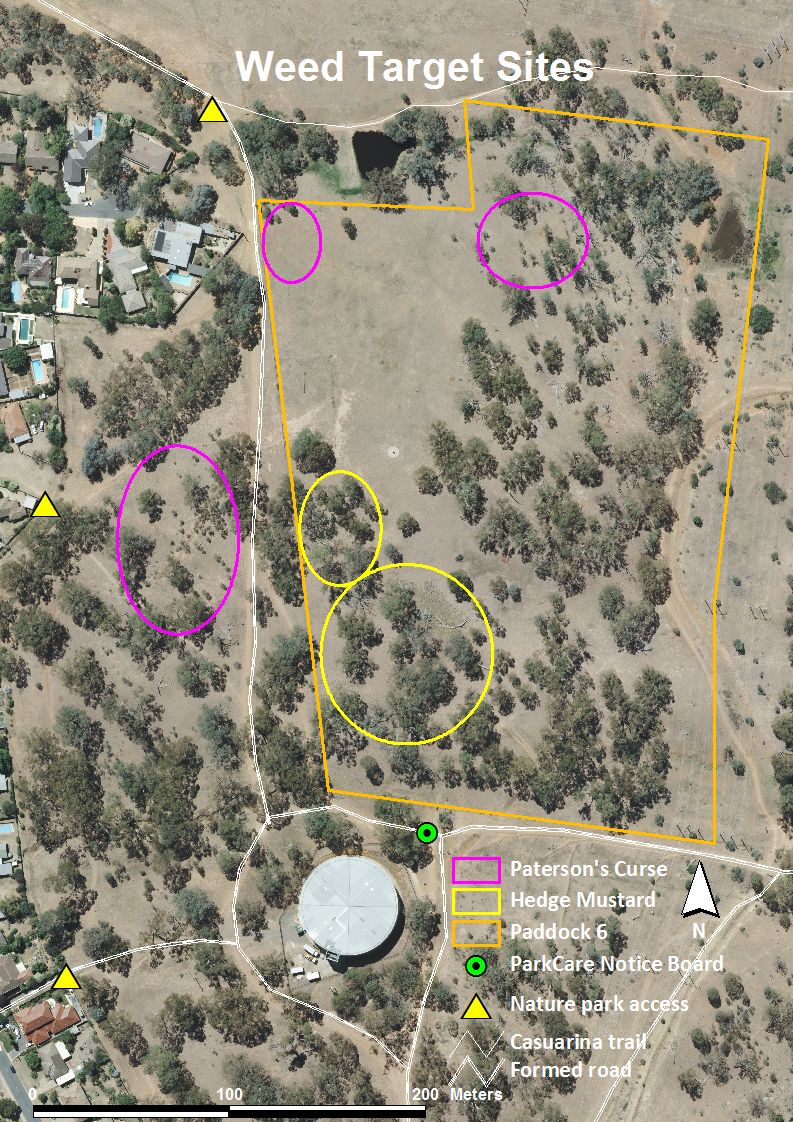
Where: in and around the Majura paddock adjacent to the water reservoir off Rivett/French Streets; click this map to view the target sites.
BYO bag or use bags deposited at the ParkCare notice board adjacent to the reservoir. Leave the weed-filled bag close to a trail for pick up.
November 2012: We made it!
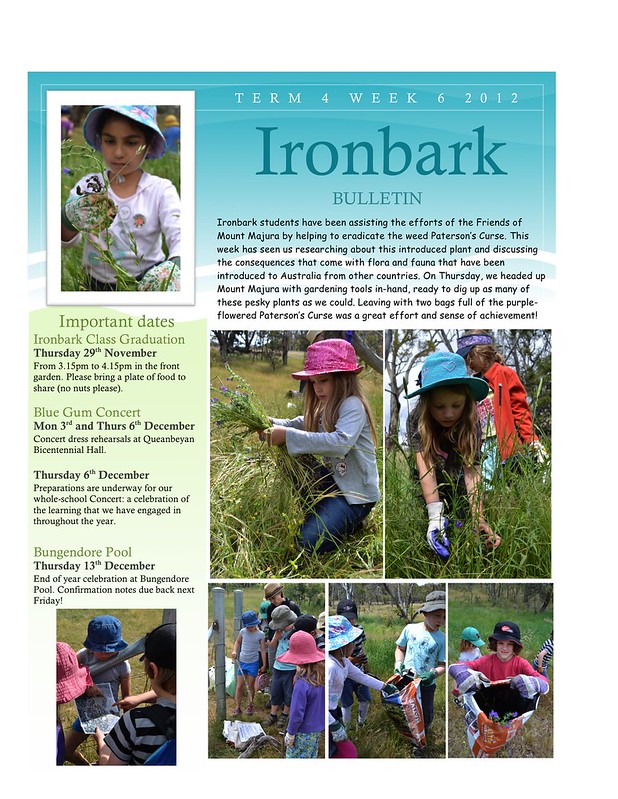
Click here to see how Paterson’s Curse disappeared at its last stronghold in the Paddock. Students of the Blue Gum Community School carried out a PC sweep; read their report.
Adopt a Paddock Tree
The old box and gum trees of the Majura paddock behind the water reservoir are magnificent. Even the dead trees provide shelter and protection for hollow breeding birds such as the Gang-Gang cockatoo. As a fallen log they support a wide range of insects such as beetles and provide foraging sites for many different animals.
In the past years volunteers of the Friends of Mount Majura removed large amounts of horehound under the tree canopy and around the big logs. We now observe some native ground cover plants such as Glycine, Geranium, Einadia, Bulbine Lily, and Sweet Hound’s Tongue reclaiming some of the sites. The weedy past however has left a legacy of seeds in the soil and we expect regrowth for years to come.
Give the environment a helping hand and adopt a tree – alive or dead, standing or fallen down. Keep the weeds at bay in the perimeter of the tree, care for the seedlings planted there and plant or direct seed local species. Work in your own time, get together as a family or a group of friends, have a picnic and watch how the surroundings of your tree are changing.
Interested? Please contact the Friends of Mt Majura.
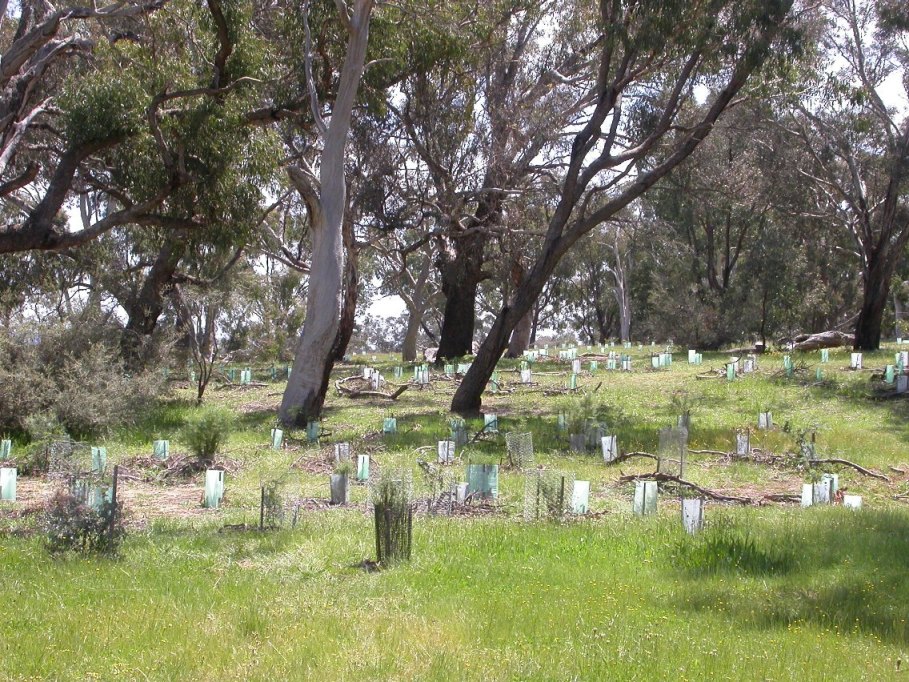 Majura Paddock in Spring 2010
Find out more about FoMM’s work on the paddock: The Horehound Story;
Majura Paddock Information: Numbers and calculations relevant to the restoration project;
Majura Paddock Flickr: Photographs of the restoration progress;
National Tree Day 2009 and National Tree Day 2011: Reports and photographs of the community planting events in winter 2009 and 2011
Preliminary list of local and introduced species