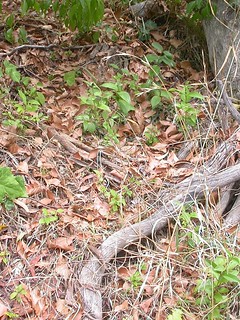
Of 136 young woody weeds counted within four square meters in the Mt Majura nature reserve behind Rivett Street, over 70% were Broad-leaved Privet (Photograph Waltraud Pix, 01.02. 2013).
Garden plants going bush. Some commonly grown plants in Canberra gardens are invading our bushland where they cause environmental damage. The “garden escapes” may be native plants that have been planted outside their natural range, or plants that have been introduced from overseas.
Your garden may be a source of garden escapes. Birds spread seeds in their droppings after eating the berries of Hawthorn, Broad-leaved privet, Cotoneaster, Firethorn or African Olive. Some garden escapes such as English Ivy, Periwinkle or Japanese Honeysuckle, can grow from stems after being dumped as garden waste.
Garden escapes cause environmental problems. They smother native plants, prevent natural regeneration and change the natural balance of resources for native animals.
You can help protecting Mt Majura’s native biodiversity:
- Choose appropriate and safe plants for your garden;
- Check your garden plants are not potential environmental weeds; view photographs of common woody weeds that occur in the Mount Majura Nature Reserve at the FoMM Woody Weeds Flickr Group: http://www.flickr.com/groups/1758385@N20/
- Remove potential weed species; take advantage of the biannual Weed Swap;
- Encourage friends, relatives and neighbours to do the same;
- Dispose of weeds in a responsible and careful manner at the Canberra Sand and Gravel green waste site in Mitchell or use trash bags – don’t dump it in the nature reserve;
- Join Friends of Mt Majura at the woody weeds working bees held on the third Sunday of each month during the warmer part of the year.
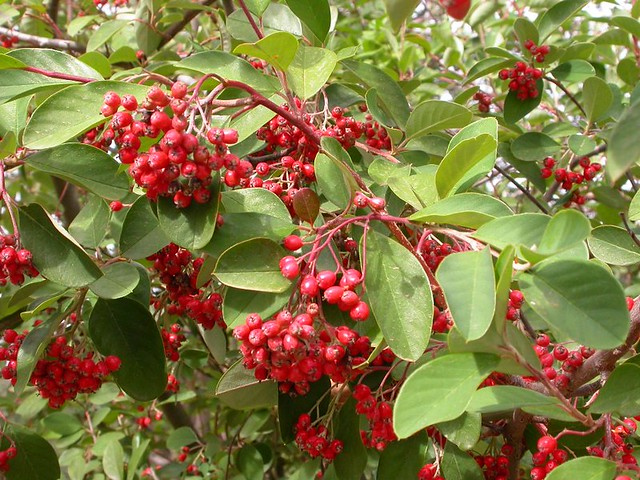
Cotoneaster glaucophyllus is a common woody weed found in the Mount Majura Nature Reserve. Photograph by Waltraud Pix, 09.04.2008
Further information:
- FoMM’s woody weeds working bees
- Parks, Conservation and Lands Ranger depot at 66-68 Grimwade St, Mitchell, ph 62072113
- www.Australia.gov.au/weeds
- Are Your Garden Plants Going Bush? (pdf 585KB)
Waltraud Pix
FoMM co-ordinator